Synergistic Research
Synergistic Research Galileo LUX Phono
Synergistic Research Galileo LUX Phono
 Deliveries over $700 - Signature Required!
Couldn't load pickup availability
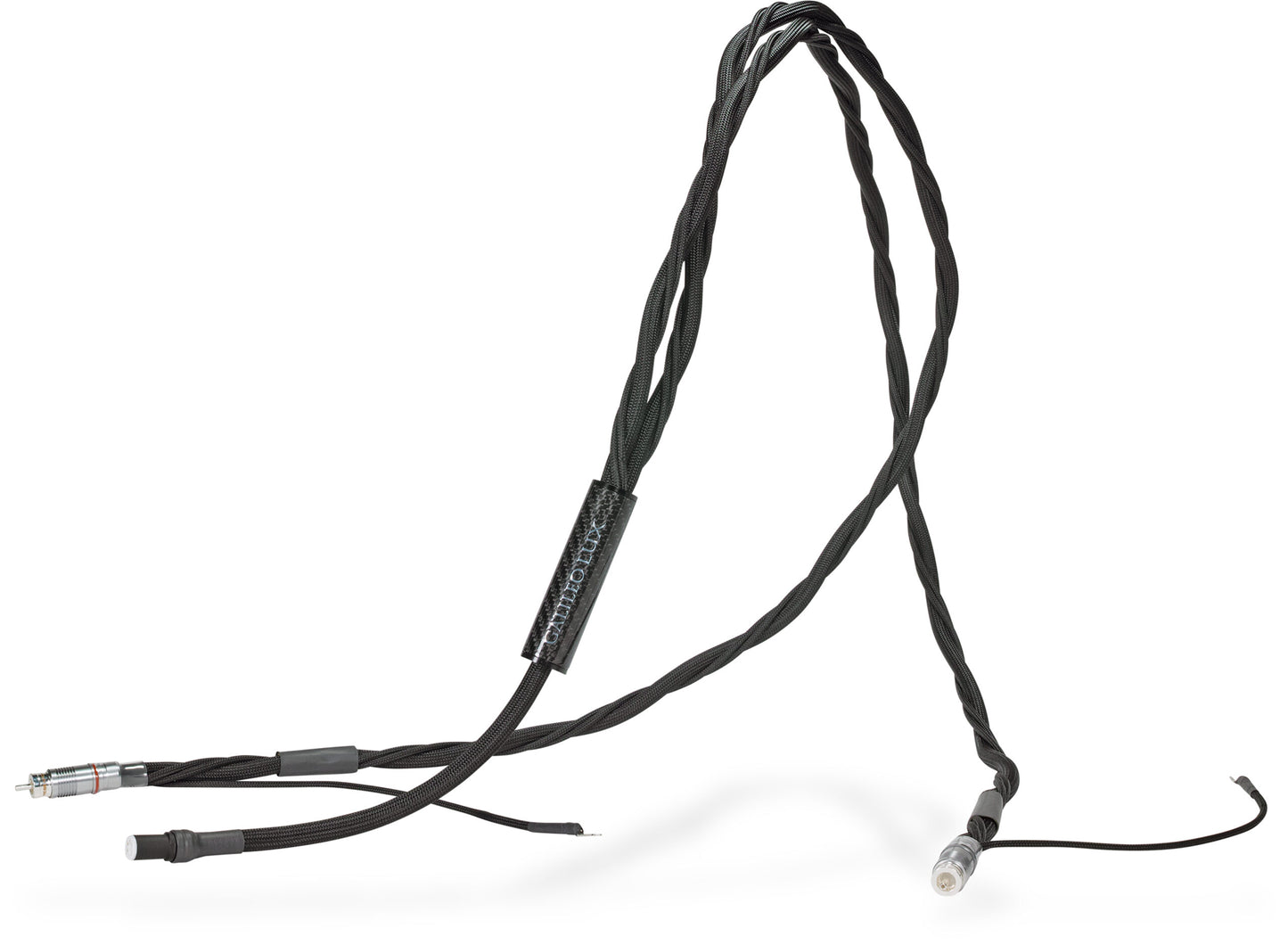
Synergistic Research / Galileo Lux / Phono interconnect
From the groove.
Through the right connection.
Galileo Lux Phono brings the silver AirString and ribbon approach to a low-level analog connection. Choose RCA or XLR, or match a straight or right-angle DIN plug to the RCA/XLR input on your phono stage.

A visual guide
The phono path.
Matched at both ends.
Begin with your tonearm or turntable output. Then check the phono-stage input and the space available for the cable.
RCA / XLR
Turntable or tonearm output
↓
Compatible RCA or XLR phono-stage input
DIN configurations
Straight or right-angle tonearm DIN
↓
RCA or XLR at the phono stage
Confirm DIN pin arrangement and the clocking of a right-angle plug against the tonearm before ordering.
The details that matter
Understand the design.
Silver AirStrings and ribbon.
SR’s published RCA/XLR construction summary combines four monofilament silver AirStrings with four RCA or six XLR silver ribbon AirStrings per pair.
Designed around the low-level link.
SR specifies air and sealed PTFE-air dielectrics across the conductor groups, together with Ground Plane Technology and UEF Active Shielding.
DIN deserves a closer look.
SR lists straight and right-angle DIN plugs. Orientation, pinout, available clearance and the phono-stage termination all matter when choosing a tonearm cable.
SR’s technology descriptions identify its design approach and intended effects. Evaluate the result in the context of your own system.

Make the connection
A small signal.
Specific requirements.
Tell us the cartridge, tonearm and phono-stage models so we can check the intended connection. An RCA or XLR socket by itself does not identify every electrical or grounding requirement of an analog front end.
The reference sheet
Construction & configuration.
| Application | Compatible turntable / tonearm to phono stage |
|---|---|
| RCA / XLR construction | 4 silver monofilament AirStrings + 4 RCA / 6 XLR silver ribbon AirStrings per pair |
| Conductor purity | 99.9999% silver in SR’s published RCA/XLR conductor list |
| Dielectric | Air / sealed PTFE-air, depending on conductor group |
| Shielding | Ground Plane Technology; UEF Active Shielding |
| Factory preparation | Custom high-voltage conditioning; five-day burn-in listed by SR |
| DIN configurations | Straight or right-angle DIN to RCA or XLR |
| Length | 1.25m; 1.75m; 2.25m; 2.75m; 3.25m |
| Jacket Color | Black; White |
| Connection | RCA; XLR; DIN Straight → RCA; DIN Right Angle → RCA; DIN Straight → XLR; DIN Right Angle → XLR |
Specifications and design descriptions: Synergistic Research. Confirm unusual connections with House of Stereo.
Before you choose
Match the system you have.
Which DIN option should I select?
Match the tonearm’s DIN connection and available clearance, then choose RCA or XLR to suit the phono-stage input. We can help confirm the pin arrangement and right-angle orientation with your equipment.
Why does the RCA/XLR construction differ?
SR’s published construction summary specifies different numbers of silver ribbon AirStrings for the RCA and XLR versions. The DIN configuration should be confirmed for your particular tonearm and phono stage.
What length should I choose?
Measure the actual route and allow space for the tonearm connector and bends. The five listed lengths begin at 1.25m and continue to 3.25m.
House of Stereo / Listening notes
Give the comparison
some context.
Keep cartridge alignment, tracking force, phono-stage gain/loading and playback level unchanged during a cable comparison. Use familiar records and check for unwanted hum before evaluating texture, space and musical flow.
Let’s get the connection right.
Tell us about your equipment, cable route and listening priorities. We’ll help you choose the configuration.